

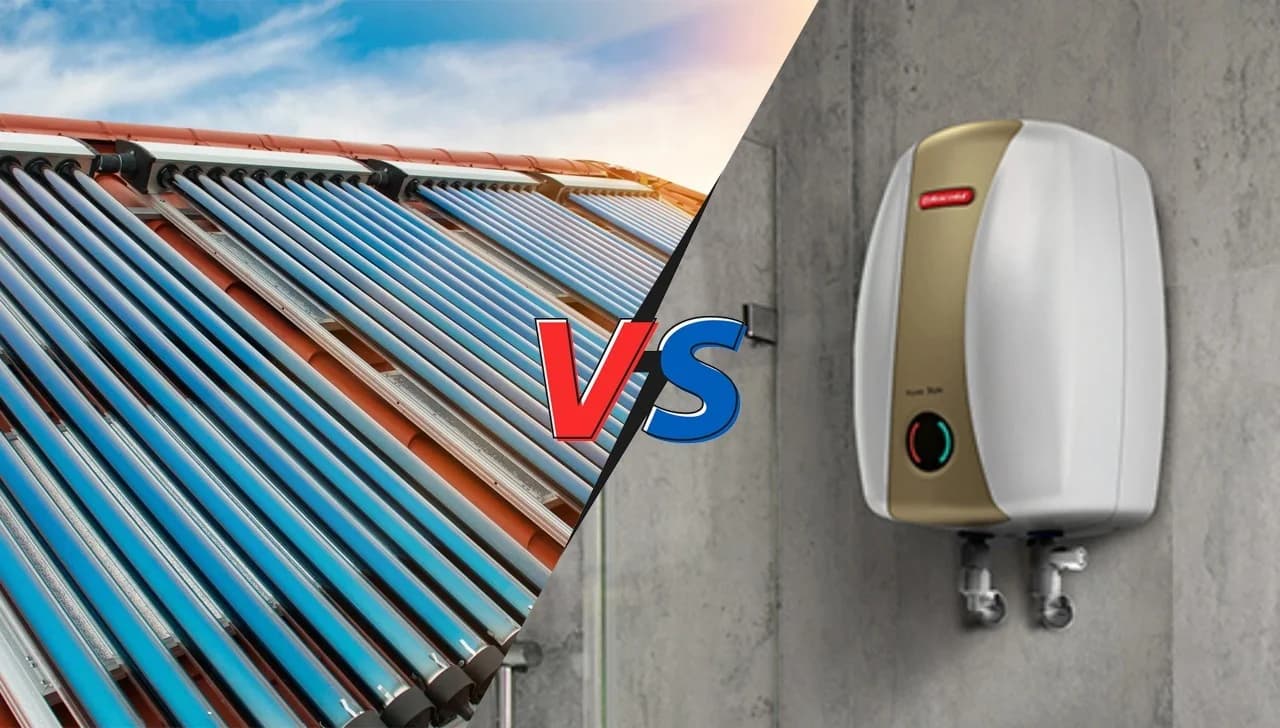
When it comes to heating water in Indian homes, solar water heaters and electric geysers are two popular options. With electricity rates climbing every year, making the right choice in 2026 can save you thousands annually.
Solar Water Heaters - How They Work
Solar water heaters use sunlight to heat water through flat-plate collectors or evacuated tube collectors (ETCs) mounted on your rooftop. Hot water is stored in an insulated tank and used throughout the day and evening without any electricity.
Advantages of Solar Water Heaters
- Zero electricity cost once installed - saves ₹500–₹2,000/month depending on usage
- Government subsidy available under MNRE scheme (up to 30%)
- Lifespan of 15–20 years with minimal maintenance
- Reduces household carbon footprint significantly
- Works well in Lucknow with 5+ peak sun hours/day
Electric Geysers - Convenience at a Cost
Electric geysers heat water on demand using resistance heating. They are cheaper to buy (₹5,000–₹15,000) but cost significantly more to operate - a 2kW geyser running for 2 hours daily consumes ~120 units/month, adding ₹720–₹960 to your electricity bill.
Cost Comparison Over 5 Years
- Solar water heater (200L ETC): ₹18,000–₹25,000 upfront → near-zero running cost → 5-year total ≈ ₹22,000
- Electric geyser (2kW): ₹8,000 upfront + ₹720/month electricity → 5-year total ≈ ₹51,200
Solar water heaters save ₹29,000+ over 5 years and keep saving for another 10–15 years after that.
Which Should You Choose?
Choose a solar water heater if you have rooftop space, consistent hot water needs (family of 3+), and want to minimise your electricity bill. Choose an electric geyser if you have limited roof access, live in a shaded area, or need hot water only intermittently.
For most homes in Lucknow and Uttar Pradesh, a 100–200 litre solar water heater is an excellent investment with a payback period of just 2–3 years.
Related Keywords